Public Safety
Connectivity that protects people.
When it matters most, communication is a lifeline. In an emergency, first responders rely on their devices to work everywhere—but steel, glass and concrete often block signals in the very places coverage is most critical, like stairwells, basements, mechanical rooms and garages.
TDC designs, funds, builds and fully manages Emergency Responder Radio Communication Systems (ERRCS) as part of our comprehensive connectivity solutions designed to ensure first responders have reliable radio coverage everywhere in the building and help you navigate complex regulations to keep people safe.
Public safety by the numbers.
of 9-1-1 calls come from mobile phones.
of law enforcement are concerned about handling major events.
of U.S. first responders reported experiencing IT malfunctions on the job.
Public safety is complex.
Meeting IFC and NFPA code requirements—and passing inspection—is not straightforward. Standards like IFC 510 and NFPA 1225 require 99% coverage in critical areas, and failing an inspection can delay certificates of occupancy.
Requirements vary by jurisdiction, interpretations differ between Authorities Having Jurisdiction (AHJs) and systems are often unclear—leading to rework, added costs, and project delays. Non-compliance can result in fines of up to $100,000 per violation, while extended timelines directly impact revenue and operations.

Transforming connectivity into a strategic value driver.
Connectivity performs better—and costs less—when experts run it. TDC manages, operates and upgrades your network turning it into a scalable business advantage.

No upfront investment
Replace capital-heavy infrastructure with a predictable model that requires no upfront investment.

Reliable and compliant
Combined with our mobile connectivity solutions, public safety becomes always-on, fully compliant and reliable.

Allows your team to focus where it counts
When TDC manages the network, your team can focus on running your business—not repairs and regulatory.
What our partners and customers say about TDC.

“Hood Park is built on cutting-edge technology that enhances how tenants live, work and play. TDC advances that vision with deep CRE expertise shaped by real-world experience. They’re not just a technical solution—they’re a true business partner.”
500 Rutherford Avenue
“From the day we started the project until the system went live, the Tillman team was great to work with and exceeded our expectations. Everything we agreed to in the contract was fully executed to our satisfaction.”
Concord Hospital
“The TDC team—from sales to engineering or project management—is always extremely responsive and fully prepared. This allows us a partner to be more precise and accurate in performing our responsibilities. As a partner, I would trust them with any opportunity.”
M-Communications
About Us
TDC is the trusted partner for enterprises, developers and property owners seeking fully managed mobile connectivity solutions. Our team of solutions experts custom designs, builds, upgrades and operates mobile networks-as-a-service—without the upfront investment.
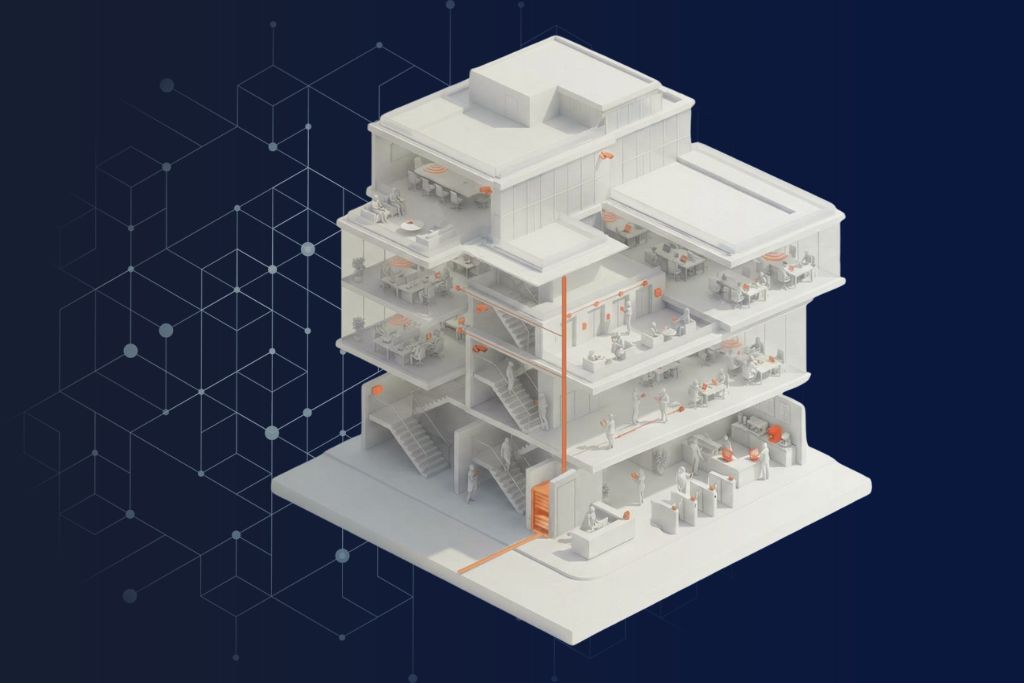
Industries powered by public safety solutions.
 Commercial Real Estate
 Hospitality
 Retail
 Financial Institutions
 Gaming & Entertainment
 Healthcare
 Higher Education
 Manufacturing
 Transportation
Real answers to the public safety misconceptions.
Mobile connectivity is changing by the day. When you partner with us, we bring the transparent guidance and seasoned insight today’s complex connectivity decisions demand.
Public safety systems are optional.
Bust the Myth 
Not exactly. Reliable public safety communications are required by code in most jurisdictions. Without proper coverage, emergency calls can fail, inspections can be failed and lives can be put at risk.
My building passed once, so I’m good forever.
Bust the Myth
False. Building codes, interpretations by Authorities Having Jurisdiction (AHJs), and technology standards evolve over time. A system that passed in the past may no longer meet current requirements or deliver reliable coverage today.
We can skip monitoring.
Bust the Myth
False. Public safety networks require ongoing monitoring and maintenance to ensure they work when it matters most. Dead zones can develop over time due to building changes, new materials or equipment aging, so continuous oversight is critical for compliance and safety.
FAQs about Public Safety.
Why is 911 connectivity such a problem in so many buildings?
There’s no guarantee that 911 calls will work without infrastructure in the building. 911 connectivity suffers indoors for many reasons. Buildings create many obstacles to the transmission of radio frequency (RF). Building materials like steel and concrete block radio waves. Alternatively, the steel frames that support buildings and elevator shafts often act like “Faraday Cages,” which block external electromagnetic fields, including RF.
Does my building need public safety or ERRCS coverage?
Most commercial buildings are required by local code to provide reliable radio coverage for first responders inside the property. If firefighters, police or EMS can’t communicate inside your building during an emergency, the building may not meet code requirements for occupancy, inspections or new construction.
Requirements vary by jurisdiction, but in general:
- New buildings almost always need ERRCS
- Major renovations often trigger the requirement
- Large, dense or below-grade spaces (parking garages, stairwells, mechanical rooms) are common problem areas
- The safest approach is to test your building to confirm compliance.
What’s the difference between a DAS and an ERRCS system?
A DAS (Distributed Antenna System) and an ERRCS (Emergency Responder Radio Communication System) both improve wireless coverage inside a building—but they serve very different purposes:
- Focused on business performance, productivity, and user experience
- Provides enhanced cellular coverage for everyday mobile phone use
- Supports major carriers (AT&T, Verizon, T-Mobile) for voice, text and data
- Improves tenant, employee, guest, and IoT device connectivity
- Typically funded by the property owner
- Uses licensed spectrum, owned by the Wireless Carriers
ERRCS (Public Safety Radio System)
- Focused on life safety and emergency communication
- Designed for first responders only (fire, police, EMS)
- Required by building and fire codes to ensure radios work everywhere inside
- Uses public safety radio frequencies, not commercial cellular
- Overseen by the AHJ (Authority Having Jurisdiction), typically the fire marshal
Do buildings need both a DAS and a Public Safety system?
Often, yes. One doesn’t replace the other. Most modern buildings require ERRCS for code compliance and rely on a cellular DAS for business operations and user connectivity.
Do you offer standalone public safety solutions (without cellular or Wi-Fi)?
It’s not really our focus. In our experience, the greatest benefit comes from combining reliable public safety communications with robust cellular or Wi-Fi connectivity—ensuring coverage, redundancy and performance across the property. We’re always open to exploring options and new business models. Reach out to discuss your challenges.
Let’s talk.
Interested in evaluating your mobile connectivity and public safety networks? We’ll show you gaps and a path to compliance—and connectivity.